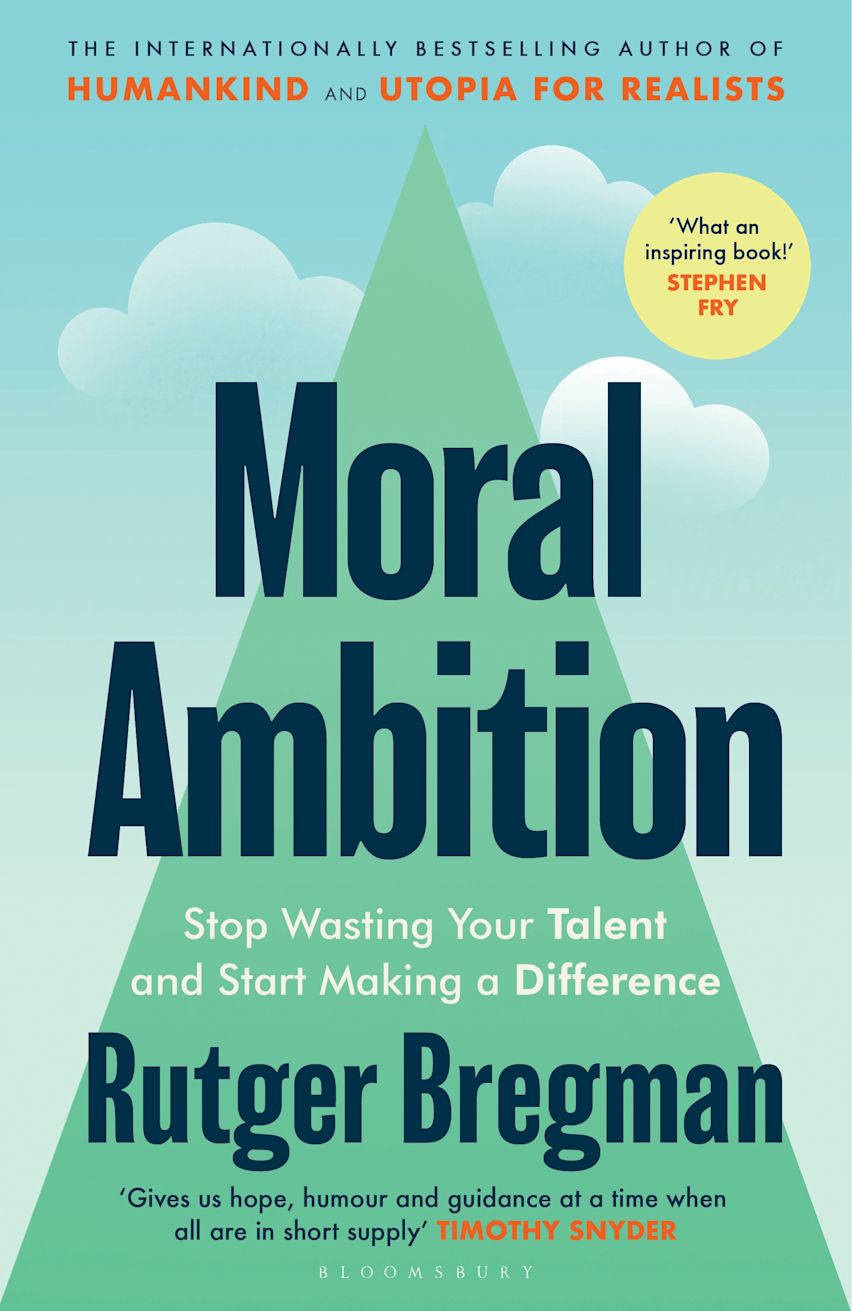

Sabrina Bonfert reviewed Moral Ambition by Rutger Bregman
A mixed bag of tools to "make a difference"
3 stars
Rutger Bregman writes this book for people who already feel like the world is full of problems and want to do something about it, and tells them to put their money where their mouth is. Bregman identifies two types of activism that aren't doing enough: realism that trades in ambitious goals for what can be easily done, and raw ambition of the "noble loser", whose ambition stops them from making necessary compromises or reflect on how to make their activism more productive.
The book then intends to both increase your ambition of what you can achieve, and to present what kinds of methods have worked in the past to achieve ambitious goals. Bregman wants to instill the reader with a sense that it isn't enough to have good intentions, you should not be above reviewing what about your activism works and doesn't work and change accordingly. The current problems he …
Rutger Bregman writes this book for people who already feel like the world is full of problems and want to do something about it, and tells them to put their money where their mouth is. Bregman identifies two types of activism that aren't doing enough: realism that trades in ambitious goals for what can be easily done, and raw ambition of the "noble loser", whose ambition stops them from making necessary compromises or reflect on how to make their activism more productive.
The book then intends to both increase your ambition of what you can achieve, and to present what kinds of methods have worked in the past to achieve ambitious goals. Bregman wants to instill the reader with a sense that it isn't enough to have good intentions, you should not be above reviewing what about your activism works and doesn't work and change accordingly. The current problems he identifies are hunger, child mortality, lack of access to medical care, animal rights and the fight for climate change. The historical analogues he makes to show what has and hasn't worked in the past discuss the fight for abolition of slavery, women's and civil rights, and sheltering of Jewish People during Nazi occupation of the Netherlands.
He firmly states that awareness of problems existing is far from enough, and you should get out there and actually do effective work, preferably as your entire career path. As he puts it, this book isn't written for people who "already have a labrador, a mortgage and a cake server." His examples of successful activists include founders of associations for the fight against malaria, vaccine researchers, diplomats in the fight against biological weapons, environmentalist lawyers and somebody who is helping poultry farmers to move away from the meat industry.
Parts of his book read like you should exploit and overwork yourself in a kind of charity start-up culture for the common good. Sure, later chapters tone it down, but it's there. There's a plea for finding the way to help the largest number of people as possible, to "disrupt the good deeds market" like a venture capitalist would. There's an entire spiel of philanthropy by very rich people and what they can achieve, too. Because this book is more about what you could do instead of why, I suspect there's going to be two kind of ways to walk away from it after finishing it.
The first kind of person would take the mentions of Peter Thiel and Sam Bankman-Fried (who are portrayed negatively) and the entire chapter full of Hogwarts analogies (very much uncritically - "be the next Dumbledore!") and decide that the moral "good" they should fight for is dismantling the rights of trans people, fight against abortion access, join an AI startup, or join a cult about GameStop stocks because of a belief that doing so is a moral good - nay, THE moral good - that's going to change the world for the better. The book doesn't explicitly argue for this, but it certainly doesn't inoculate its readers enough against joining these cults. For example, the only mention trans people get in the book is where he derides trans activists for sabotaging the potential collaboration of conservatives in the fight for reproductive rights by insisting feminism be trans-inclusive.
The other way to walk away from this book, then, is to take what works from it and discard what doesn't. No activist should be above looking at the effects their current efforts have had, critically examining them, and adapting methods and changing course if necessary. Being aware of an issue isn't enough, you need to get off your sofa and do something to create lasting change. You need to form coalitions, be ambitious and realistic at the same time, look after yourself and your health, and don't get roped in by understanding activism as allegiance to charismatic leaders. Maybe Rutger Bregman is himself one of those.